For anyone building a modern home theater or music listening station, separating legitimate acoustic upgrades from snake-oil accessories can feel like navigating a minefield. While the consumer audio market is full of dubious add-ons like ultra-expensive gold-plated digital cables that do nothing for digital 1s and 0s, amplifiers represent a foundational pillar of physical sound reproduction. Yet despite their decades-long prominence in high-end hi-fi boutiques, many listeners misunderstand what amplifiers actually do, where they are already hiding in existing gear, and whether buying a standalone box is worth hundreds or thousands of dollars.
Before spending money on extra shelf hardware, listeners need to understand how amplification interacts with speakers, how signal gain works, and why simpler, lower-cost system tweaks often yield far better acoustic returns.
The Fundamental Job: Boosting Weak Signals to Move Air
At its most basic level, an audio amplifier takes a microscopic electrical signal and expands its voltage and current so that it possesses enough physical energy to move a speaker driver back and forth. Audio sources—including music streaming DACs, CD players, media servers, and phonograph cartridges—generate very faint audio signals. Without amplification, those signals lack the strength to push physical speaker cones into the surrounding air.
A classic illustration of this reality is the phenomenon known as "needle talk" on a vinyl turntable. If you spin a record on a turntable with the speaker outputs and internal electronics disconnected, you can lean in close to the cartridge and hear a faint, metallic hiss trace across the vinyl grooves. The mechanical vibration of the stylus riding the groove is generating a real sound, but it is too weak to fill even a tiny room without electronic enlargement.
Beyond raw volume, a capable amplifier governs signal integrity. It provides headroom—the buffer needed to reproduce abrupt sonic peaks, like a kick drum hit or an explosive movie sound effect, without clipping or introducing harsh harmonic distortion. Modern amplifiers also manage gain adjustments and frequency equalization (EQ), allowing users to tailor low-end bass and vocal clarity while matching electrical specifications to downstream hardware.
Watch: Will an Amplifier Improve Your Home Theater? Home Theater Basics

Video: Youthman | CommunityAV on YouTube
Decoding the Signal Chain: Preamps, Power Amps, and Integrated Systems
 Photo: Engadget - Technology News & Expert Reviews (source)
Navigating amplifier hardware requires understanding the distinction between stages in the audio signal chain:
- Preamplifiers (Preamps): Preamps handle input switching, volume control, and the critical job of lifting extremely weak, low-level electrical signals (such as the millivolt-scale signals from a turntable cartridge or microphone) up to a standard line-level voltage. A dedicated phono preamp also applies the inverse RIAA equalization curve required to balance vinyl playback. However, a preamp on its own cannot drive external speakers.
- Power Amplifiers: A power amp takes that standardized line-level signal and multiplies the current and voltage dramatically, converting it into high-wattage output capable of driving passive speaker coils against mechanical resistance. Pure power amps generally lack volume knobs or source selectors; their sole function is raw, clean signal magnification.
- Integrated Amplifiers: As the name suggests, an integrated amplifier combines both a preamplifier and a power amplifier inside a single physical chassis. This eliminates the need for separate interconnect cables between the two stages and saves considerable shelf space.
- Audio/Video Receivers (AVRs): Common in living rooms, an AVR is an integrated amplifier expanded with multi-channel surround decoding (such as Dolby Atmos and DTS:X), digital-to-analog converters (DACs), video HDMI switching, and automated room correction software.
Active vs. Passive Speakers: Amps Hiding in Plain Sight
A widespread misconception among casual audio buyers is that building any decent sound system requires shopping for a separate amplifier unit. In reality, millions of households already own multiple amplifiers without knowing it.
The determining factor is whether your speakers are active or passive:
- Active (Powered) Speakers: These units feature built-in amplifiers tuned specifically by the manufacturer to match the internal speaker drivers. Computer desktop speakers, soundbars, smart speakers (like Apple HomePod or Amazon Echo), wireless multi-room speakers (such as Sonos), and professional studio monitors are all active speakers. If a speaker plugs directly into a standard AC wall outlet, it already houses its own amplification stage. Adding an external amplifier to an active speaker is not only unnecessary, but it can also permanently damage the hardware.
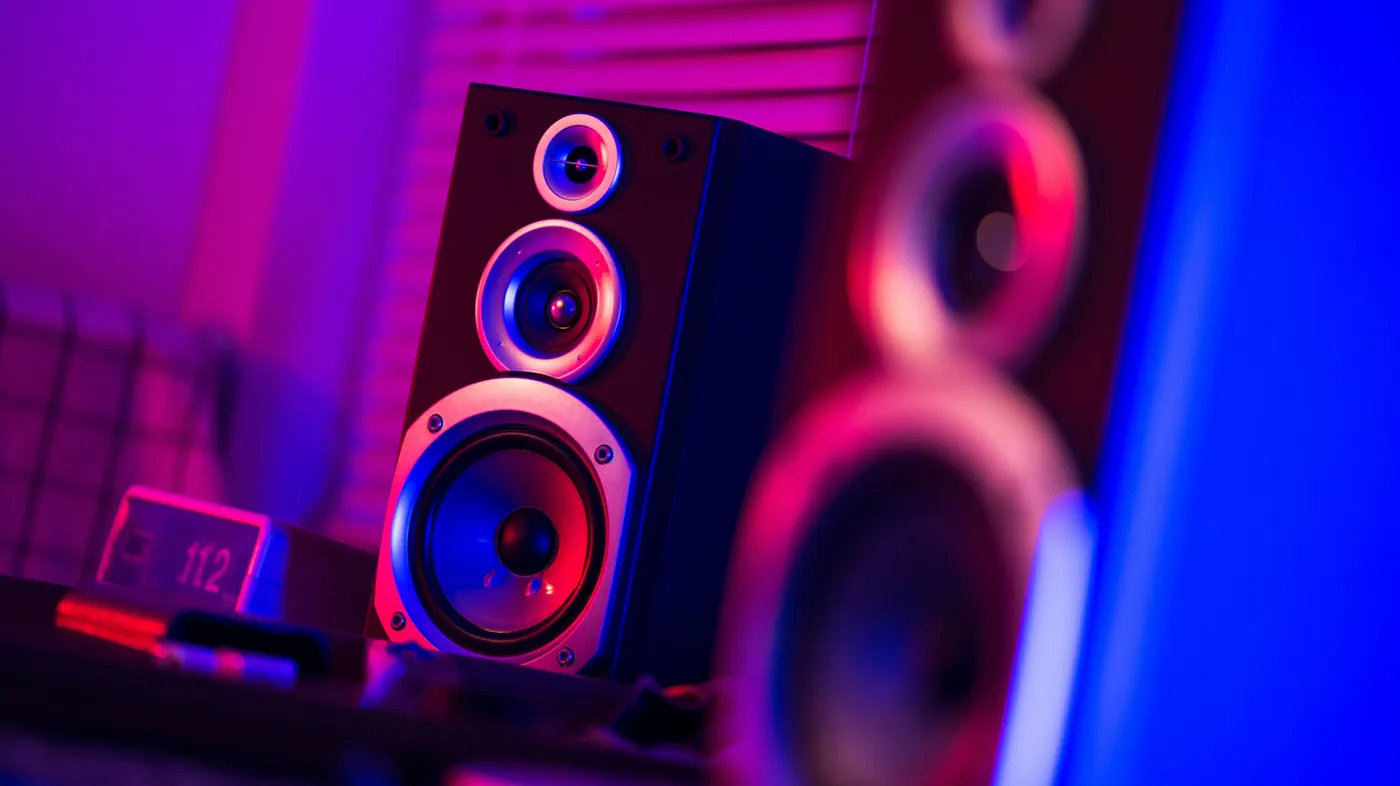
- Passive Speakers: Traditional bookshelf, floor-standing, and architectural architectural-ceiling speakers lack built-in electronics or power cords. They feature bare wire binding posts or banana plug jacks and rely entirely on an external power amplifier or receiver to send them electrical energy.
Solid-State vs. Vacuum Tubes: Clarifying the Trade-Offs
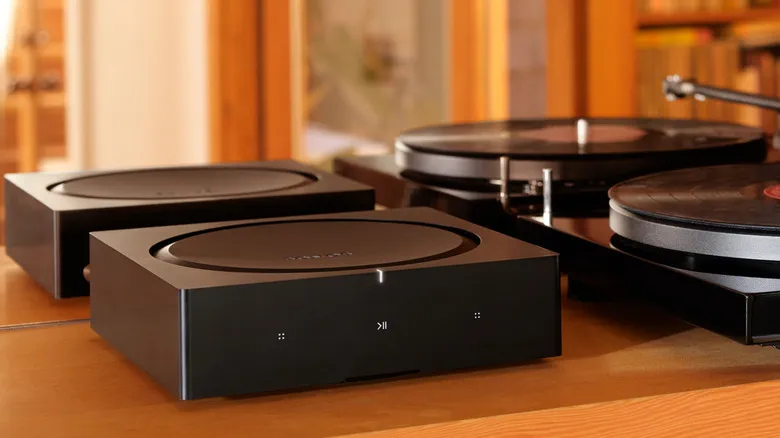 Photo: Engadget - Technology News & Expert Reviews (source)
When consumers do look into standalone amplification, they inevitably encounter the philosophical divide between modern solid-state electronics and vintage-style vacuum tube amplifiers. While tube amps carry an undeniable aesthetic appeal with their glowing glass filaments, their technical reality is often misunderstood.
| Feature / Metric | Solid-State Amplifiers | Vacuum Tube Amplifiers |
|---|---|---|
| Core Component | Silicon transistors & ICs | Thermionic glass valves |
| Typical Output Power | 50W to well over 500W per channel | Typically 10W to 50W per channel |
| Acoustic Character | Transparent, neutral, ultra-low distortion | Warm, second-order harmonic coloration |
| Energy Efficiency | High (especially Class D designs) | Low (generates substantial excess heat) |
| Maintenance Required | Virtually none; runs for decades | Periodic tube replacement as filaments wear |
| Multi-Channel Feasibility | Standard for 5.1, 7.1, and Atmos AVRs | Impractical and prohibitively expensive |
Tube designs naturally introduce soft, even-order harmonic distortion, which listeners frequently describe as pleasing, warm, or musical. However, because tube amplifiers generally cap out around 50W per channel or less, they struggle to supply the massive dynamic reserves needed for complex surround audio or insensitive speakers. For general living room setups, multi-channel movie watching, and high-efficiency fidelity, solid-state designs remain far more practical, reliable, and cost-effective.
When Do You Actually Need a Dedicated External Amp?
If you own passive speakers, an all-in-one AV receiver or integrated stereo amp will satisfy almost every standard home scenario. However, there are specific situations where a dedicated, standalone power amplifier becomes genuinely useful:
- High-Channel-Count Dolby Atmos Theaters: Many upper-tier AV receivers can process 11.2 or 13.2 distinct audio channels (such as a full 7.2.4 surround layout with four in-ceiling height speakers), but their internal power supplies may only include amplification for 9 channels. In these cases, an external two-channel power amp is required to drive the remaining height or rear channels.
- Low-Impedance, Hard-to-Drive Speakers: High-end audiophile speakers often feature a nominal impedance of 4 ohms (or dip even lower into 2 ohms during heavy bass loads). Budget receivers can overheat or trigger protective shutdown circuits under those loads, whereas a robust, dedicated power amp delivers clean, stable high-current power.
- Very Large Listening Spaces: Driving passive speakers to cinematic reference levels in large, open-concept basements or auditoriums requires significant wattage to prevent distortion during sudden dynamic transients.
More Cost-Effective Ways to Improve Sound Quality
 Photo: Engadget - Technology News & Expert Reviews (source)
For the vast majority of listeners, spending $500 to $2,000 on a high-end amplifier will deliver negligible audible improvements compared to addressing other acoustic bottlenecks in the room. Before investing in heavier amplification, audio experts recommend several far cheaper, high-impact upgrades:
- Speaker Positioning: Moving bookshelf or tower speakers just 12 to 24 inches away from boundary walls significantly reduces muddy, boomy bass resonances caused by rear reflex ports. Angling tweeters inward ("toe-in") directly toward the primary listening seat sharpens stereo imaging and dialogue clarity.
- Vibration Isolation: Placing speakers on dedicated, sand-filled stands or placing small, inexpensive silicone isolation pucks or dense foam mats under desktop monitors eliminates unwanted mechanical rattles and energy transfer to furniture.
- Room Acoustics and Soft Furnishings: Bare hardwood floors, large glass windows, and empty drywall reflect sound waves, muddying high frequencies. Adding an area rug, heavy curtains, or strategically placed acoustic absorption panels dramatically reduces flutter echo and harsh reflections.
- Digital Room Calibration: If your system includes a modern AVR or smart speaker equipped with room-tuning software—such as Sonos Trueplay, Audyssey MultEQ, or Dirac Live—run the calibration routine after any room layout changes to correct for room frequency anomalies.
- Upgrading the Speakers Themselves: Speakers have a vastly greater influence on sound character, frequency response, and detail than the amplifier driving them. Stepping up from an entry-level plastic soundbar to a dedicated stereo pair or a dedicated multi-channel soundbar array yields an immediate, unmistakable difference.
Practical Advice for Buyers
When planning your audio setup, let your speaker choice dictate your amplification needs, never the other way around. If convenience, compact aesthetics, and simple wiring are paramount, active speakers or self-contained soundbars provide the best balance of performance and ease.
If you prefer the modularity and longevity of passive speakers, prioritize a reputable integrated stereo amplifier or a mid-range AV receiver from established brands. Check the speaker's sensitivity rating (measured in dB SPL at 1 watt/1 meter) and impedance rating. A typical speaker rated at 87 dB to 90 dB sensitivity and 8 ohms impedance requires only modest power—40W to 80W per channel—to reach room-filling, cinema-grade volumes without strain. Unless you are assembling an expansive multi-channel ceiling theater or powering low-impedance audiophile speakers, a dedicated external power amp can stay off your shopping list.
FAQ
Do amplifiers make speakers sound louder or better?
A capable amplifier accomplishes both: it supplies the physical power needed to reach higher volumes while delivering clean, low-distortion current that preserves dynamic peaks and vocal clarity. However, an expensive amplifier will not make poorly engineered speakers sound good.
Do all speakers require an amplifier?
Yes, all physical speakers require an amplifier to convert line-level audio signals into physical sound. However, active speakers, powered soundbars, and computer speakers have amplifiers built directly into their housings, meaning you do not need to buy a separate external unit.
Can an amplifier damage your speakers?
Yes, pairing an amplifier that dramatically exceeds a speaker's thermal power rating can blow driver voice coils. Conversely, using an underpowered amplifier pushed to severe clipping can send destructive high-frequency distortion into tweeters.
Is a tube amplifier better than a solid-state amplifier?
Neither is universally superior; solid-state amplifiers offer higher wattage, greater reliability, negligible distortion, and lower operating temperatures. Tube amplifiers provide a warm, harmonically rich sound favored by some vinyl purists, but they generate heavy heat, produce low wattage (often 50W or less), and require regular maintenance.
What is the difference between a preamplifier and a power amplifier?
A preamplifier handles input switching, volume regulation, and boosts tiny source signals up to standard line-level voltage. A power amplifier takes that line-level signal and scales up the wattage and current to physically move the speaker drivers.