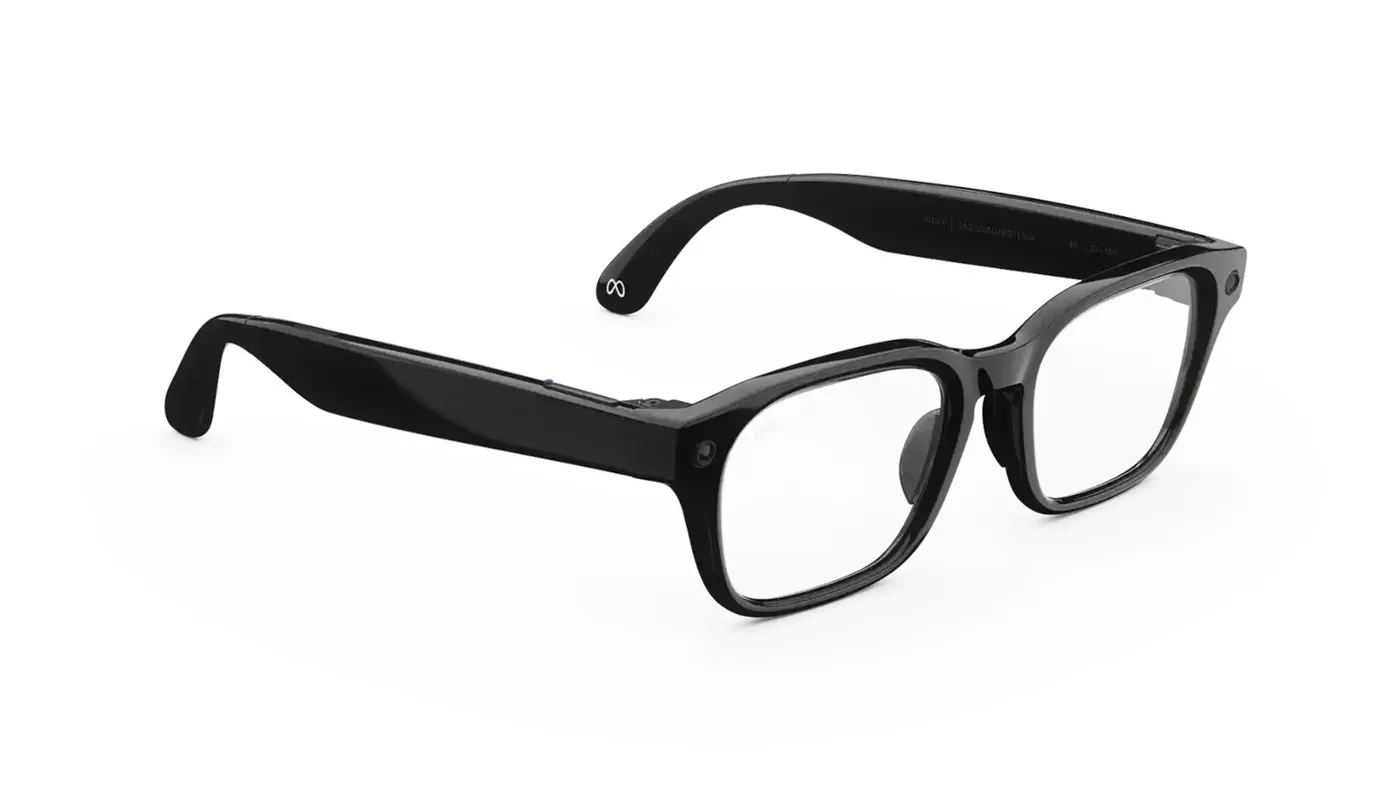
Meta is reportedly preparing to launch a new pair of smart glasses that completely ditch the camera, aiming to deliver wearable artificial intelligence without the social and regulatory friction of covert video recording. Internally code-named "Luna," the camera-free wearable could be unveiled at Meta's annual Connect developer conference on September 23–24, 2026, with consumer shipments slated to begin as early as October.
First reported by The Information, the move marks an intriguing course correction for the social media giant. While Meta's camera-equipped Ray-Ban smart glasses have emerged as a genuine commercial hit—moving roughly 7 million units—they have faced persistent privacy scrutiny, public unease, and venue bans. By stripping out image sensors entirely, Meta is angling to win over shoppers who want a voice-driven AI assistant and open-ear audio without the social baggage of a lens on their face.
The Scoop: Inside Meta's 'Luna' Smart Glasses
According to people familiar with the project, Meta’s upcoming hardware aims to separate its conversational AI ambitions from ambient video capture. Rather than replacing the current Ray-Ban Meta line, Luna is designed as an alternative product tier centered entirely on audio, communication, and conversational computing.
Luna will reportedly launch in at least two classic frame silhouettes: Clubmaster and Burbank. Both are signature styles within the EssilorLuxottica catalog, suggesting Meta is continuing its tight collaboration with the eyewear conglomerate even as it tests a camera-free approach.
Targeting an October rollout directly following Meta Connect 2026, the device would expand Meta's hardware catalog at a moment when tech giants and startups alike are racing to claim space on users' faces.
Watch: Wait... Smart Glasses are Suddenly Good?

Video: Marques Brownlee on YouTube
Hardware and Design: What Changes When the Lens Disappears
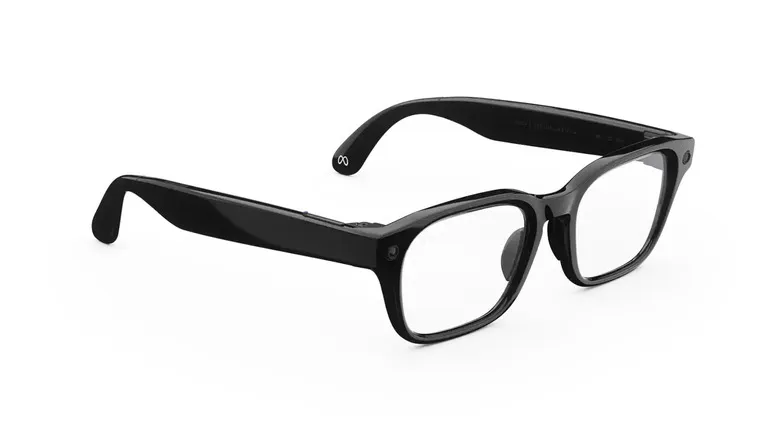 Photo: Engadget - Technology News & Expert Reviews (source)
Removing camera sensors dramatically simplifies the industrial design of smart eyewear. In camera-equipped glasses, engineers must squeeze image sensors, lens barrels, thermal dissipation material, and dedicated wiring into the outer corners of the frame front and temples.
By omitting that hardware, Luna reportedly gains several physical advantages:
- Slimmer Temples: Without camera modules and associated processing boards, the arms of the frame are noticeably thinner, helping the glasses blend in as standard, everyday prescription eyewear or sunglasses.
- Reduced Weight: Less internal hardware directly translates to lower weight across the bridge of the nose and ears, improving all-day comfort.
- Dedicated AI Trigger: The frames will feature a physical action button on the side temple, giving wearers instant tactile access to summon Meta's AI assistant without voice prompts.
- No Telltale Apertures: Observers looking at Luna will see smooth frame fronts free of camera lenses, glass cutouts, or blinking privacy LEDs.
Audio and AI Capabilities: Six Mics and 'Muse' in Your Ear
While Luna drops visual capture, Meta is doubling down on acoustic hardware. The new model will reportedly feature six built-in microphones—an upgrade over the five-microphone array found on second-generation Ray-Ban Meta glasses.
The denser mic array serves two primary purposes: superior beamforming for phone calls in noisy outdoor environments, and reliable wake-word detection when users issue voice commands to Meta AI.
Luna wearers will be able to converse with Meta's core AI chatbot as well as "Muse," Meta's newly launched consumer AI agent designed to manage tasks, retrieve information, and handle ambient voice workflows. Directional open-ear speakers positioned near the temples will funnel audio directly toward the user's ear canals, keeping podcasts, notifications, and AI responses audible to the wearer while minimizing sound leakage to nearby bystanders.
However, dropping the camera comes with a functional trade-off: Luna will not support Meta AI's multimodal "Look and Ask" feature. Wearers cannot ask the assistant to identify a landmark, translate a physical menu, or suggest recipes based on ingredients sitting on a kitchen counter, because the glasses have no eyes.
The Specs Comparison: Luna vs. Camera-Equipped Smart Glasses
 Photo: biggo.com (source)
| Feature / Spec | Meta 'Luna' (Reported) | Ray-Ban Meta (Gen 2) | Amazon Echo Frames (Gen 3) |
|---|---|---|---|
| Camera | None | 12 MP (ultra-wide) | None |
| Microphones | 6 beamforming mics | 5 beamforming mics | 2 beamforming mics |
| Audio | Directional open-ear speakers | Directional open-ear speakers | Directional open-ear speakers |
| Styles Reported | Clubmaster, Burbank | Wayfarer, Skyler, Headliner | Multiple rectangular / round frames |
| Visual AI Capture | No | Yes ("Look and Ask") | No |
| Physical Controls | Dedicated AI button, touchpad | Capture button, touchpad | Action button, touchpad |
| Privacy LED | Not applicable | Front-facing white LED | Status LED (facing wearer) |
| Expected Launch | Connect (Sept 2026) / Ship Oct 2026 | Available now | Available now |
| Price | Unannounced (est. $199–$299) | Starts at $299 | Starts at $269 |
The Backlash That Prompted the Pivot
Why would a company betting heavily on multimodal AI remove the camera? The answer lies in mounting social and regulatory pushback.
Since their debut, camera-equipped smart glasses have drawn harsh criticism from privacy advocates who argue that discreet, face-mounted cameras make it nearly impossible for the public to know when they are being recorded. Online forums and social media have documented instances of harassment and unauthorized filming, leading some critics and commentators to derisively label the hardware "pervert glasses".
Meta attempted to mitigate these concerns by installing a bright front-facing LED that pulses when video capture is active. However, users quickly discovered workarounds, using tape, paint, or 3D-printed stickers to obstruct the light. In August and September 2026, Meta pushed software updates that actively disable the camera if the sensor detects the LED is obstructed or tampered with. Even so, regulatory scrutiny in Europe and venue bans—such as restrictions at public pools, fitness centers, corporate campuses, and testing centers—have hampered mainstream comfort with camera glasses.
By releasing a dedicated camera-free edition, Meta provides an escape valve: a device that delivers voice-based smart assistant capabilities without prompting suspicion from colleagues or bystanders.
Competitive Landscape: The Rise of Audio-First Eyewear
 Photo: biggo.com (source)
Meta is not the first company to explore camera-free smart glasses, but its entry transforms the market. Amazon has steadily iterated on its Echo Frames line, which integrates Alexa into standard eyeglass frames without a camera, though it has struggled to achieve widespread cultural breakout. Niche audio-eyewear brands like Lucyd, Solos, and Bose (which previously produced Bose Frames) carved out modest followings by focusing strictly on audio playback, hands-free calls, and voice control.
Meta’s advantage lies in its vast software ecosystem, aggressive AI development, and its partnership with EssilorLuxottica, which controls premier eyewear brands and thousands of retail optical stores worldwide. If Meta can sell Luna through standard optometrists and fashion boutiques as normal prescription frames with high-end audio and AI, it could dominate the audio-first wearable niche in a way tech-first competitors never could.
What It Means for Everyday Buyers and Enterprise Users
For consumers, Luna represents a practical compromise. Many potential smart-glasses buyers like the idea of streaming music without earbuds, taking phone calls while keeping their ears open to traffic, and dictating quick messages on the go. However, many of those same shoppers hesitate to wear a camera on their face at work, at family gatherings, or in public transit.
Luna also holds substantial appeal for enterprise and professional environments:
- Workplace Compliance: High-security workplaces, healthcare facilities, financial firms, and government offices strictly ban recording devices. Luna could bypass those bans entirely.
- Social Comfort: Wearers do not have to endure awkward glances or explain to friends whether the glasses are actively recording.
- Prescription Usability: Those who need corrective lenses all day can wear Luna from morning to night without worrying about running out of battery from camera processing or getting kicked out of locker rooms.
What to Watch Next: Meta Connect and Unanswered Questions
With Meta Connect kicking off on September 23, 2026, several critical details remain unconfirmed:
- Pricing: Will Meta price Luna significantly lower than the $299 Ray-Ban Meta baseline to drive volume, or will premium materials and audio engineering keep pricing flat?
- Battery Life: Without the high power draw of 1080p or 3K video encoding, Luna could theoretically offer substantially better all-day battery performance than existing models.
- Branding: It remains to be seen whether Luna will officially carry the Ray-Ban banner or launch under another EssilorLuxottica brand (like Oakley) or a standalone Meta moniker.
CEO Mark Zuckerberg has repeatedly positioned smart glasses as the successor to smartphones. In Luna, Meta is testing whether consumers want the future of computing on their faces—provided it comes without a camera lens pointed at the world.
FAQ
Do the new Meta Luna smart glasses have any camera at all? No. According to reports, Luna completely removes all cameras, image sensors, and front-facing capture hardware.
Can Luna smart glasses use Meta AI's visual features? No. Because the glasses lack cameras, users will not be able to use "Look and Ask" multimodal features that identify objects, read signs, or analyze your surroundings.
What features do Luna glasses still support? Luna supports conversational Meta AI and Muse voice queries, open-ear audio for music and podcasts, hands-free phone calls, and voice messaging via an array of six microphones.
When will Meta announce and ship the camera-free glasses? Meta is expected to preview the hardware at its Connect conference on September 23–24, 2026, with shipments reportedly scheduled to start in October 2026.
Why is Meta making smart glasses without a camera? The model is designed to address widespread privacy concerns, circumvent venue bans in sensitive locations like gyms and pools, and offer a slimmer, less controversial option for everyday wear.