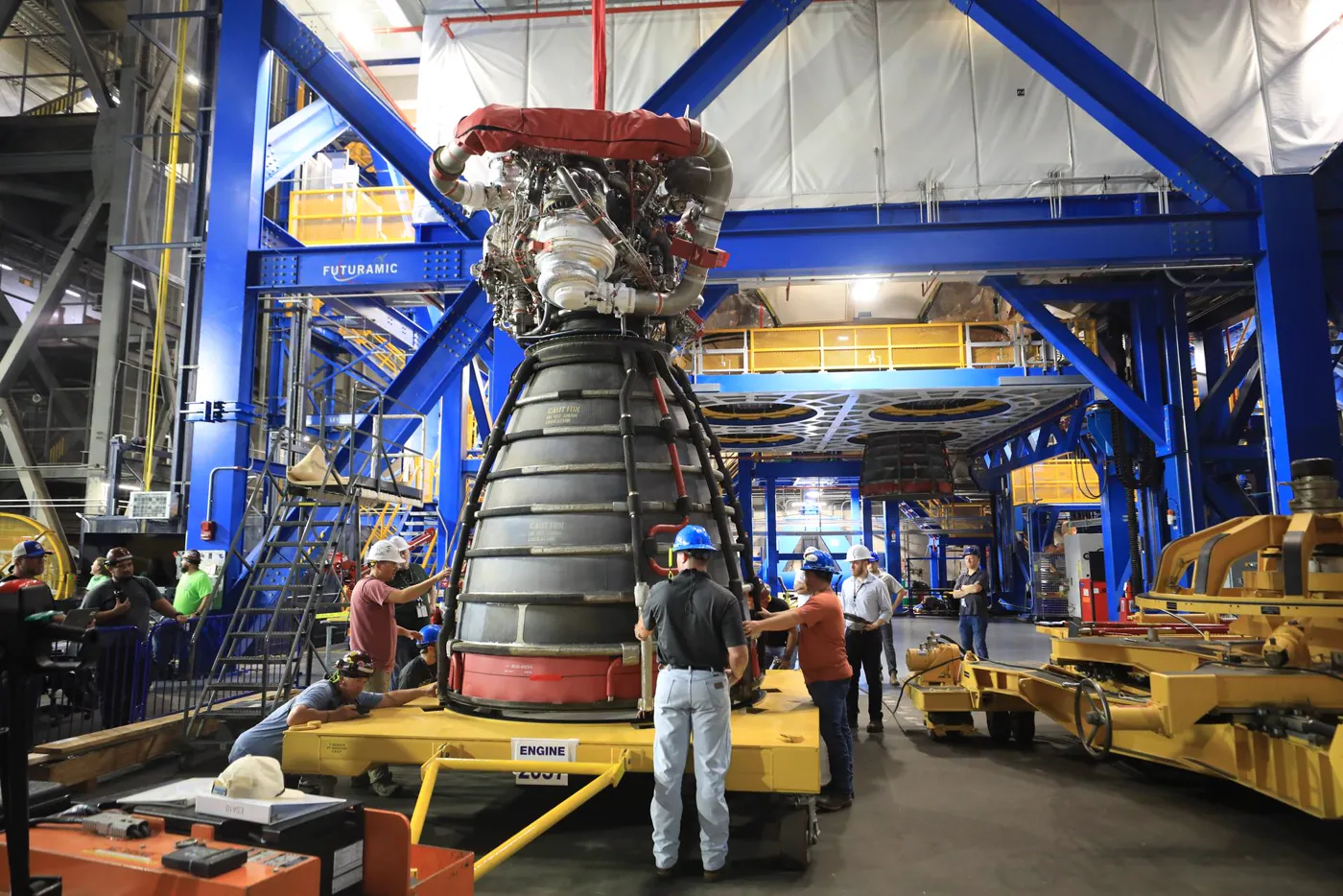
The rocket that will fly NASA's next crewed Artemis mission is taking shape inside Kennedy Space Center. Technicians began installing the four RS-25 engines on the Space Launch System core stage on August 24, and follow-up reporting this month says all four are now in place, clearing the way for final outfitting before the stage is moved onto Mobile Launcher 1 between the twin solid rocket boosters.
Engines with a history
The four engines, serial numbers E2054, E2057, E2048 and E2052, are refurbished Space Shuttle hardware. Between them they supported 36 shuttle missions, including International Space Station assembly flights and the 1998 mission that returned John Glenn to space. Each weighs about 7,700 pounds, produces nearly 500,000 pounds of thrust, and will fire for more than eight minutes during ascent while the stage burns propellant at roughly 1,500 gallons per second.
Booster stacking in the Vehicle Assembly Building began in early July and is more than halfway complete, with NASA saying it has streamlined the process since the last Artemis launch.
The mission and the crew
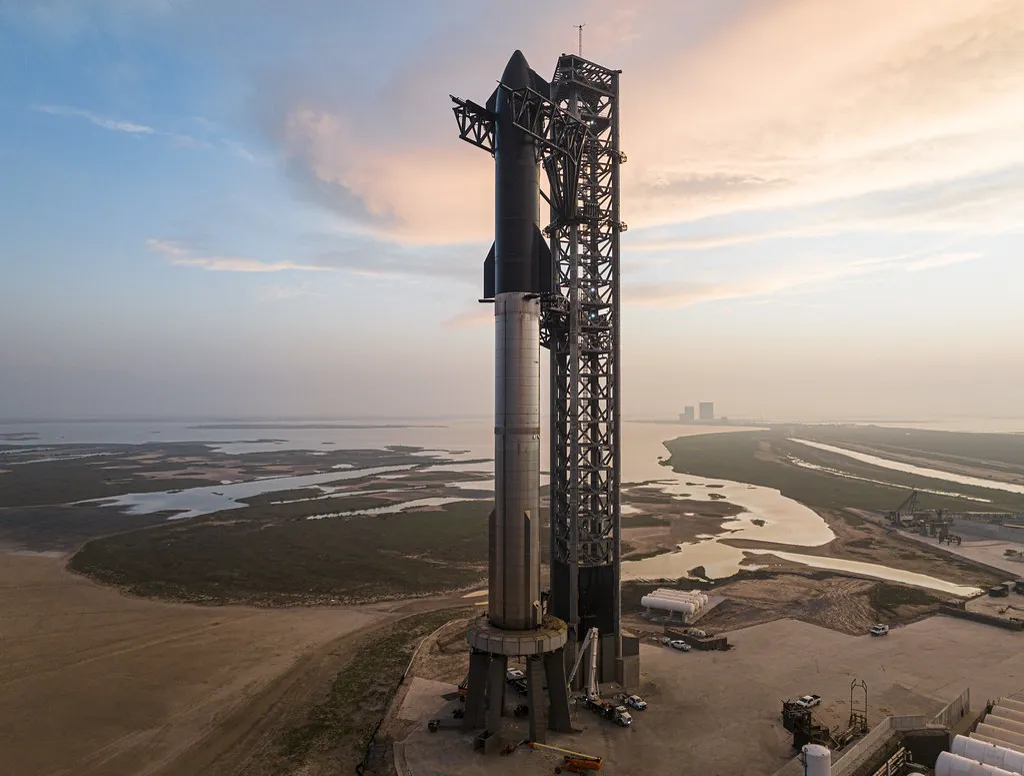
Artemis III has changed shape. Rather than a lunar landing, it is now a 2027 flight to low Earth orbit where the Orion capsule will practice rendezvous and docking with one or both Human Landing System vehicles, SpaceX's Starship and Blue Origin's Blue Moon Mark 2. That rehearsal is the gate for a crewed Moon landing in 2028.
The crew, announced June 9, is NASA astronauts Randy Bresnik, Andre Douglas and Frank Rubio, joined by ESA's Luca Parmitano. Their training is organized around ascent, orbit and rendezvous, entry, and landing, and includes water survival drills, spacesuit work in the Neutral Buoyancy Lab and integrated simulations with flight controllers.
NASA's administrator said in mid-August he is "extremely confident" the mission launches in 2027, and separately NASA and Northrop Grumman have begun repurposing Gateway elements toward Moon base demonstration missions.
Source: NASA, Spaceflight Now
Photo: NASA (source)